

ADU 101
The complete guide to accessory dwelling units
An ADU is a small, self-contained home on the same lot as your main house, a backyard cottage, in-law suite, garage apartment, or finished basement unit. Here's what they are, the forms they take, and how to know if one is right for your property.
The Basics
What exactly is an ADU?
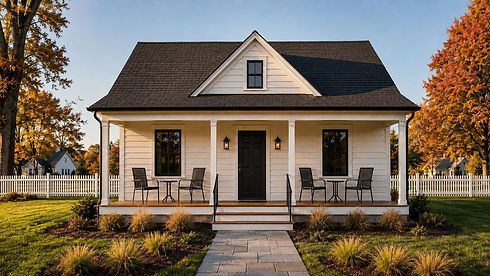
An accessory dwelling unit is a fully independent home that shares a lot with a primary residence. It has its own kitchen, bathroom, sleeping area, and private entrance, everything a household needs to live independently.
You can't sell an ADU separately from the main house, but you can use it however your town allows, housing family, generating rental income, or creating flexible space that grows with your needs. People also call them in-law suites, backyard cottages, carriage houses, or granny flats, see the ADU dictionary for plain-English definitions of these and other terms.
The Four Types
Four ways an ADU can take shape
Which one fits depends on your lot, your budget, and what your town allows.
Four ways an ADU can take shape
A freestanding cottage in the backyard, fully separate from the main house. The most private option, and the one most tenants and family members prefer.
Best for privacy & rental appeal
Garage or above-garage
Convert an existing garage, or build a carriage-house unit above one, a smart way to add a private space without giving up yard.
Best for tight lots
Attached
A new unit connected to the main house, often sharing a wall or roofline. Can be more cost-effective by reusing existing structure and utilities.
Best for lower cost
Basement or internal
A legal apartment carved from existing space inside the home, with its own entrance. Subject to egress, ceiling height, and code review.
Best for usin space you have
Why Homeowners Build Them
One backyard, room for what matters most
Family & care
Keep aging parents, adult children, or a caregiver close, with privacy on both sides.
Rental income
Turn unused yard space into a steady stream that helps offset your mortgage.
Added value
Livable square footage buyers actively seek, a long-term investment in your equity.
Flexibility
A home office today, guest space next year, a downsizing option down the road.
1
Lot size, setbacks & coverage
These determine whether a detached unit fits and how large it can be.
2
Sewer vs. septic
Public sewer is usually simpler; septic lots often need capacity review and may limit bedrooms.
3
Your town’s rules
Zoning decides where ADUs are allowed, how big, and whether detached units are permitted.
4
Access for delivery
A clear path for delivery and installation matters, especially for modular units.
5
Your goal
Family, rental, office, or resale value , each points toward a different size and layout.
Next step
How the build works
Our seven-step process from first conversation to move-in.
Explore
Our nine models
From a 504 sq ft studio to a 1,053 sq ft two-bedroom.
Plan for it
Ways to finance
Six funding paths and how to keep a low first mortgage.
